
Are you throwing out perfectly good equipment?
Is your organisation throwing away perfectly good PPE and other safety equipment? I hope so! What are thorough examinations? Who is this LOLER I keep hearing about?
Sam Lee
2/23/20267 min read
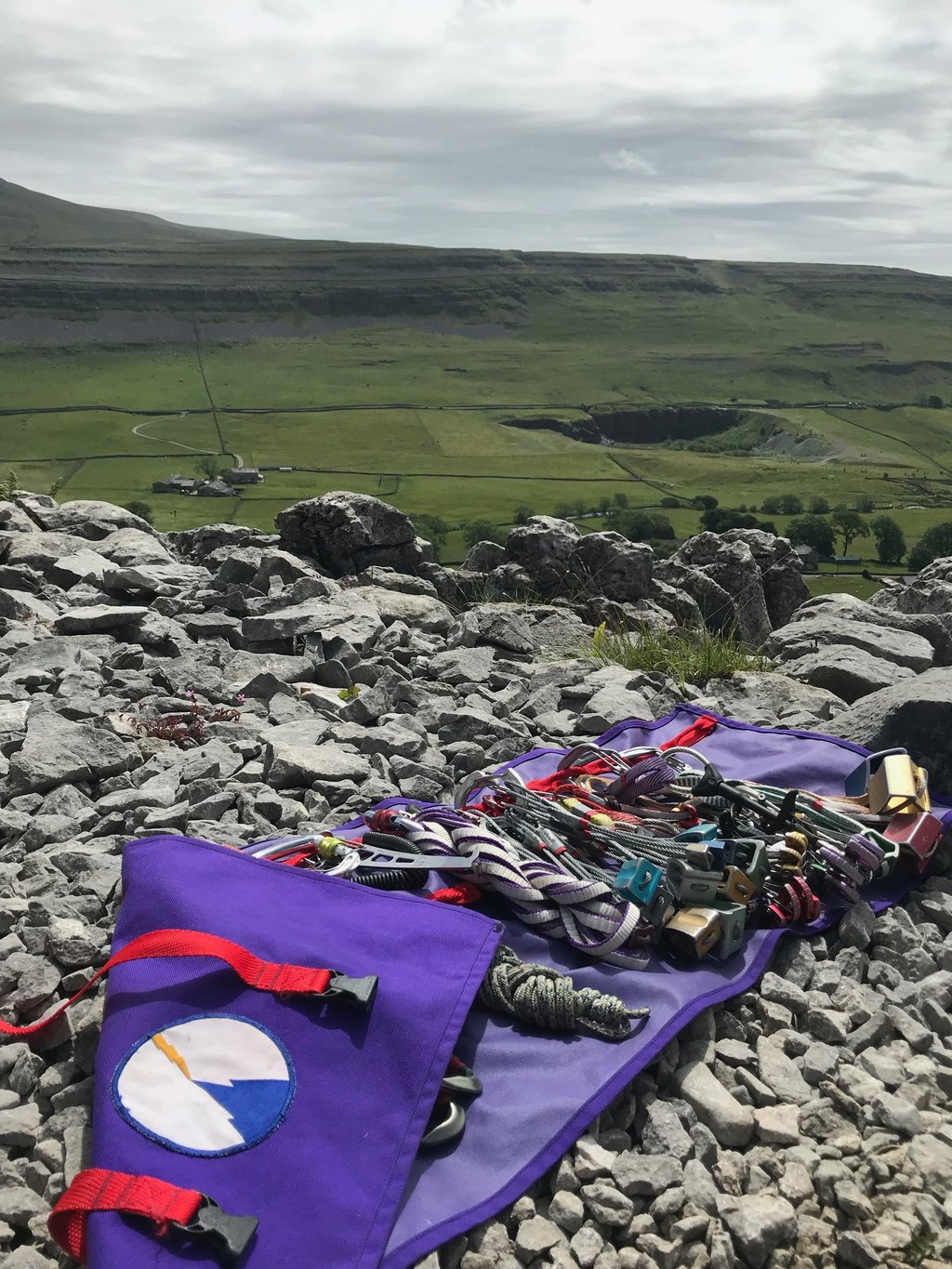
Are you throwing away perfectly good equipment?
If you’re looking at your quarantine bin and seeing harnesses, slings, and helmets that look "just fine," you might be feeling a sting in your budget. Is your organisation throwing away perfectly good PPE and safety equipment?
I certainly hope so.
That might sound counter-intuitive. Nobody likes waste, or paying for usable equipment to be thrown away but hopefully I can convince you that you should be doing just that.
This article introduces some of the core concepts around scheduled inspections and thorough examinations under the LOLER, PUWER and Work at Height Regulations. This is not a substitute for training and experience and is designed to provide context to a non-technical audience on the landscape of equipment management in adventure activities.
The Legal Bit: LOLER, PUWER, and the 'Competent Person'
Outdoor providers operate under strict regulatory frameworks like LOLER (Lifting Operations and Lifting Equipment Regulations 1998) and PUWER (Provision and Use of Work Equipment Regulations 1998). These acronyms can be confusing and are often parroted at training courses, but what do they mean for us?
LOLER
The "Six-Month" Rule
Under LOLER, any equipment used for lifting people must undergo a formal “thorough examination” by a "competent person" at least every 6 months. This thorough examination should be documented. We’ll come back to the idea of a ‘competent person’ later on.
What’s included: Harnesses, karabiners, pulleys, ropes, auto-belays, and even the anchors or cables they attach to. In short, anything that supports a person.
Equipment Mapping and Tracing
You cannot simply have a "box of karabiners". LOLER requires that every single piece of safety-critical hardware is:
Uniquely Identifiable: Usually via a serial number, asset label or laser-etched ID.
Logged: You must maintain a "birth-to-death" record for every item, documenting when it was bought, every inspection it has passed, and any incidents it has been involved in.
Inspection Hierarchy
LOLER introduces a three-tier approach to operating with lifting equipment:
Pre-use Checks: Performed by activity leaders before every use.
Interim/Periodic Inspections: Completed by an in-house competent person to track wear and tear. This might be daily, weekly, monthly or quarterly for example depending on the equipment, use, and environment.
Statutory Thorough Examination: The 6-monthly "legal" check mentioned above. This might be conducted by an in-house ‘competent person’ but the regulations stipulate that this person must have genuine authority and independence.
Retirement of Equipment
LOLER places a requirement on operators to note manufacturer’s guidance when considering how to use and retire a piece of equipment. The legislation does not explicitly require organisations to retire equipment that is beyond the manufacturer’s stated lifespan but it does place weight behind manufacturer’s guidance. This means in practice you need to have a really great reason not to follow manufacturer’s recommendations. According to the Health & Safety at Work Act 1974 and case law, cost alone is not a valid reason to avoid safety measures unless it is ‘grossly disproportionate’ to the risk reduction. Buying a new harness every 10 years is unlikely to meet the threshold of ‘grossly disproportionate’.
PUWER
If LOLER is about the "up and down," PUWER is about the "suitability, safety, and maintenance" of everything else from a lawnmower used for site upkeep to the archery bows given to participants.
For an activity provider, PUWER applies to a massive range of gear that LOLER doesn't touch:
Activity Equipment: Archery bows, air rifles, canoes, paddles, mountain bikes, and helmets (when not part of a lifting system).
Site Maintenance: Lawnmowers, chainsaws, tractors, and workshop tools (drills, saws).
Office & Facilities: Kettles in the staff room, printers, and even cleaning equipment.
Infrastructure: Fencing, gates, and fixed installations like storage racking.
Suitability
PUWER effectively requires us to ensure equipment provided is suitable for the specific conditions of its use. Equipment must be suitable for the ‘intended user’. For example a mountain bike for a 6-year-old must be physically appropriate for their size and strength.
Maintenance
PUWER requires this equipment to be inspected at ‘suitable intervals’. This might be more often than every 6 months, it might in some rare instances be less often. For example whilst the anchors in a climbing wall fall under LOLER and must be inspected every 6 months, typically the structure of the climbing wall is thoroughly inspected annually, with periodic checks to ensure nothing has visibly changed.
Operation
PUWER places a heavy emphasis on who is using the gear.
Instructors: You must prove that staff have received "adequate training" not just in how to teach the activity, but in how to safely operate and check the equipment itself.
Participants: While PUWER primarily protects employees, the "safe system of work" it mandates extends to how your staff manage the public using that equipment.
The Competent Person
A competent person is someone who has the right mix of knowledge, training, and experience to carry out thorough examinations. Competence is not just about having a qualification on paper. A competent person must understand how the equipment works, how it can fail, and what to look for during an inspection. They also need to be able to make clear, confident and independent decisions about whether something is safe or not.
One key point that often gets overlooked is independence. The competent person should be impartial. That means they should not be under pressure to “pass” equipment that is actually unsafe. If this is an in-house competent person, how can you ensure that this person is genuinely independent?
In many cases, companies bring in an external inspection body to make sure this independence is maintained. This helps ensure decisions are based purely on safety, not business pressures. This is especially important for statutory thorough examinations.
Inspection Outcomes
There are several possible outcomes from a thorough examination. Typically this includes:
Checked Good - the item is in good working condition with no issues
Monitor - the item has an issue which could deteriorate to be a problem but is currently within tolerance
Missing - the item cannot be found!
Quarantine - the item has been relocated to a dedicated quarantine space
Retire - the item has been removed from circulation and securely disposed of
If a piece of equipment passes an inspection, it is usually marked as ‘Checked Good’ on software, spreadsheet or old-fashioned clipboard. This means that the equipment is in good working condition with no issues that require monitoring.
‘Monitor’ is typically used to track minor issues with an item, such as usual wear on a rope, karabiner, or harness for example. Monitor should come with some accompanying description of ‘what’ is being monitored, and a description of the condition so that deterioration can be determined, measured, and tracked over time. An item should not be on ‘monitor’ if it is not clear why. Monitor should only be used for minor issues which do not affect safety or performance but may require highlighting at the next inspection.
Missing is hopefully self-explanatory. If items are later found, they should be treated with suspicion. Where have they been? Has Sally been using it to tow her tractor? It requires judgement as to whether you should retire the item due to this missing period. At the very least it should be thoroughly examined before use.
Quarantine is used when an item is under some suspicion and should therefore be removed from use until it can be repaired, inspected, or retired. A safe quarantine location is secure (locked, or otherwise inaccessible to activity leaders) and clearly marked. This quarantine box should be advertised to all staff so that issues arising from pre-use checks result in the equipment being quarantined immediately.
Retired equipment should be removed from use and securely disposed of. This usually involves making the item unusable through some form of applied violence. Tough-cut scissors (paramedic shears) cut through belay loops, buoyancy aid straps, rope, and even a penny (when new). Karabiners can be deformed with a hammer and some determination. This ensures they cannot be accidentally reused, causing an accident elsewhere.
When To Retire Equipment
Training is required to make this determination, along with substantial experience, ideally 'apprenticeshiping' with an experienced inspector. That being said, there are a few guidelines which can provide managers, trustees, and other non-technical stakeholders with some insight into the process.
At the start of this article I claim you should be throwing away perfectly good equipment. If you are throwing away dangerous equipment, your organisation allows equipment to degrade to a condition where it may cause an accident or incident. This is not acceptable. We should be retiring equipment before it becomes dangerous, i.e. when it is still perfectly safe to use.
So, the next time you see a "perfectly good" piece of equipment headed for the scrap heap, don't see it as a waste of money. See it as a successful safety culture in action. You aren't losing a tool; you're preventing an accident.
About the Author
For this article I thought it was best to add a short statement with some of my experience to qualify the arguments made above. Whilst I make no claim that this article is 100% accurate, it reflects my understanding based upon my training, experience, and research.
I am a technical advisor for Caving and related activities, holding the Cave Instructor Certificate (CIC) from the British Caving Association, as well as awards in several other disciplines at a high level. I am a full member of the Association of Heads of Outdoor Education Centres and have managed the provision at an outdoor education centre and multiple climbing walls.
I teach at the University of Leeds, running a module specifically in risk management in adventure activities for the Sport Science degree.
I recommend you obtain bespoke advice for your specific context and requirements from a suitable technical advisor. This is a service I offer but equally I have a network of other technical advisors and frequently make recommendations where I feel someone else is better placed to provide advice. Get in touch through the form below for a no-obligation phone call.
This article, as with our other posts, does not constitute legal advice.
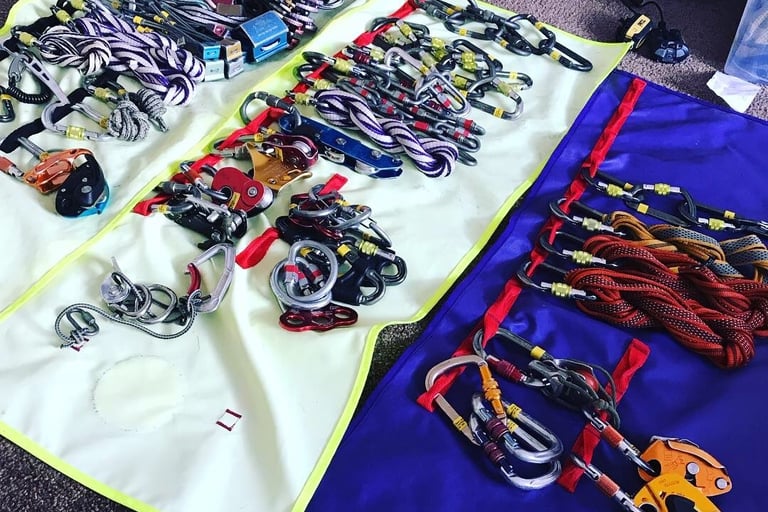
Need Technical Advice?
Fill out the form below and we'll be in touch!


Stormy Sky Ltd
A Yorkshire-based experiential learning consultancy.
Get in touch
+44 (0) 752 395 4434
© 2025. All rights reserved.
View our Privacy Policy